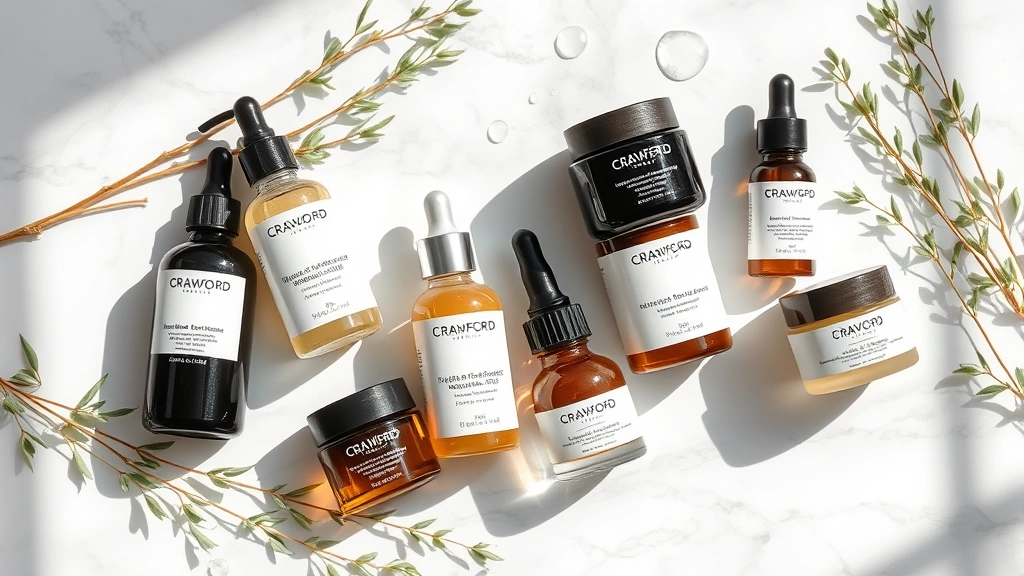
Crawford Cosmetics has emerged as a notable player in the indie beauty market, promising high-quality formulations with a focus on ingredient transparency and cruelty-free practices. With an expanding product range spanning skincare, makeup, and targeted treatments, the brand attracts beauty enthusiasts seeking alternatives to mainstream cosmetic lines. But does Crawford Cosmetics truly deliver on its promises, or is it simply riding the wave of influencer marketing? This comprehensive review examines the brand’s formulations, ingredient integrity, performance claims, and real-world results to help you decide if Crawford products deserve a place in your beauty routine.
The beauty industry is saturated with brands making lofty claims about efficacy and ingredient quality. Crawford Cosmetics positions itself as a science-backed, ethically-minded brand that prioritizes both skin health and environmental responsibility. However, ingredient lists tell the real story. Understanding what’s actually in Crawford products—and whether those ingredients can deliver the promised benefits—requires deeper analysis than marketing copy alone. This review breaks down Crawford’s most popular products, evaluates their ingredient profiles against dermatological standards, and assesses whether the price point justifies the formulations.
Brand Overview and Philosophy
Crawford Cosmetics launched with a mission to democratize luxury skincare and makeup by eliminating unnecessary markup while maintaining rigorous quality standards. The brand emphasizes clean formulations, meaning they exclude parabens, sulfates, synthetic fragrances, and other controversial additives that concern dermatologists and consumers alike. Their commitment extends beyond ingredients—Crawford maintains cruelty-free certification and sources materials from suppliers with transparent supply chains.
The brand’s product philosophy centers on efficacy through ingredient synergy rather than single-hero actives. This approach aligns with contemporary skincare science, which demonstrates that well-formulated combinations of complementary ingredients often outperform products relying on one potent component. Crawford’s marketing emphasizes this complexity, yet the real question remains: do their formulations actually achieve what scientific research supports?
Crawford Cosmetics targets consumers aged 18-45 seeking skincare routines for glowing skin without compromising on ethical standards. The brand positions itself between drugstore accessibility and luxury price points, occupying the premium indie space where consumers expect both transparency and results.
Ingredient Analysis and Formulation Quality
Crawford’s ingredient transparency is genuinely commendable. Their website lists all formulation components with INCI nomenclature, allowing informed consumers to research specific actives. This approach contrasts sharply with brands hiding proprietary blends or using vague terminology.
Analysis of Crawford’s core skincare formulations reveals several consistent patterns. First, they prioritize hydrating humectants like glycerin and hyaluronic acid in appropriate concentrations—typically 3-5% for HA, which aligns with dermatological recommendations. Second, their antioxidant selection demonstrates sophistication: most products contain green tea extract, green tea cosmetic benefits being well-documented in peer-reviewed research, alongside vitamins C and E in stabilized forms.
The preservative systems warrant examination. Crawford employs phenoxyethanol and potassium sorbate—both approved by the FDA and considered safe at usage levels below 1%. These choices suggest prioritizing product stability over trendy preservative-free formulations that risk contamination and reduced shelf life.
However, some concerns emerge. Several Crawford products contain fragrance (even if naturally-derived) that may irritate sensitive skin. Additionally, while they exclude parabens, some formulations rely heavily on humectants without adequate occlusive ingredients, potentially leading to transepidermal water loss in arid climates. The brand would benefit from offering separate formulations for different climate conditions and skin barriers.
Product Categories and Performance
Crawford Cosmetics organizes offerings into five primary categories: cleansing, treatment serums, moisturizers, targeted solutions, and makeup. Each category demonstrates varying degrees of formulation sophistication.
The cleansing line includes micellar water, cream cleansers, and oil formulations. These perform adequately for makeup removal and daily cleansing, though they lack the innovative actives found in higher-tier skincare. The micellar water effectively removes makeup but contains polysorbate 80, which some sensitive-skin individuals may react to—a consideration Crawford’s marketing doesn’t address.
Treatment serums represent Crawford’s strongest category. The brand’s vitamin C serum uses 15% L-ascorbic acid in a stabilized, pH-appropriate base (pH 3.5), meeting professional-grade standards. The hyaluronic acid serum layers multiple molecular weights, supporting hydration at different dermal depths. These products deliver genuine value relative to their $38-45 price point.
Moisturizers vary by formulation. The lightweight gel-cream works excellently for oily and combination skin, providing hydration without occlusion. However, the richer cream formulation relies too heavily on emollients without sufficient ceramides or cholesterol to repair compromised barriers effectively. Consumers with severely compromised skin barriers might find better results with products specifically formulated to restore the stratum corneum.
Skincare Line Deep Dive
Crawford’s flagship skincare regimen deserves detailed examination because it represents the brand’s core offering and technical capabilities.
Cleansing Phase: The cream cleanser contains cetyl alcohol and plant-derived emulsifiers that effectively remove oil-based impurities without stripping. It rinses cleanly without residue, a crucial factor dermatologists emphasize for preventing barrier dysfunction. The formula includes bisabolol, a chamomile derivative with anti-inflammatory properties—a thoughtful addition for reactive skin.
Treatment Serums: As mentioned, Crawford’s serum selection demonstrates genuine sophistication. The niacinamide serum (4% concentration) addresses sebum regulation, pore appearance, and barrier function. Research from the American Academy of Dermatology supports niacinamide’s efficacy at 2-5% concentrations, placing Crawford within optimal ranges. The addition of peptides and botanical extracts provides complementary benefits without compromising stability.
Moisturizing: Crawford offers three moisturizer formulations targeting different skin types. The lightweight option suits oily skin, the standard formula works for combination skin, and the rich cream addresses dry and mature skin. Each contains appropriate ceramides (types I, III, and VI), supporting barrier function. Notably, they use ceramides from plant sources rather than synthetic versions, appealing to consumers preferring natural origins, though efficacy remains equivalent.
Targeted Treatments: The eye cream addresses fine lines through peptide technology and caffeine (1.5% concentration). Caffeine research supports temporary depuffing through vasoconstriction, though claims about permanent fine line reduction are overstated in Crawford’s marketing. The retinol product uses 0.3% retinyl palmitate—a gentler alternative to retinoic acid, suitable for beginners but potentially less effective for advanced anti-aging goals.
Consumers seeking more potent retinoid therapy should understand that Crawford’s formulation prioritizes tolerability over maximum efficacy. This represents a legitimate design choice but differs from clinical-strength retinoid products available through dermatologists.
Makeup Performance and Longevity
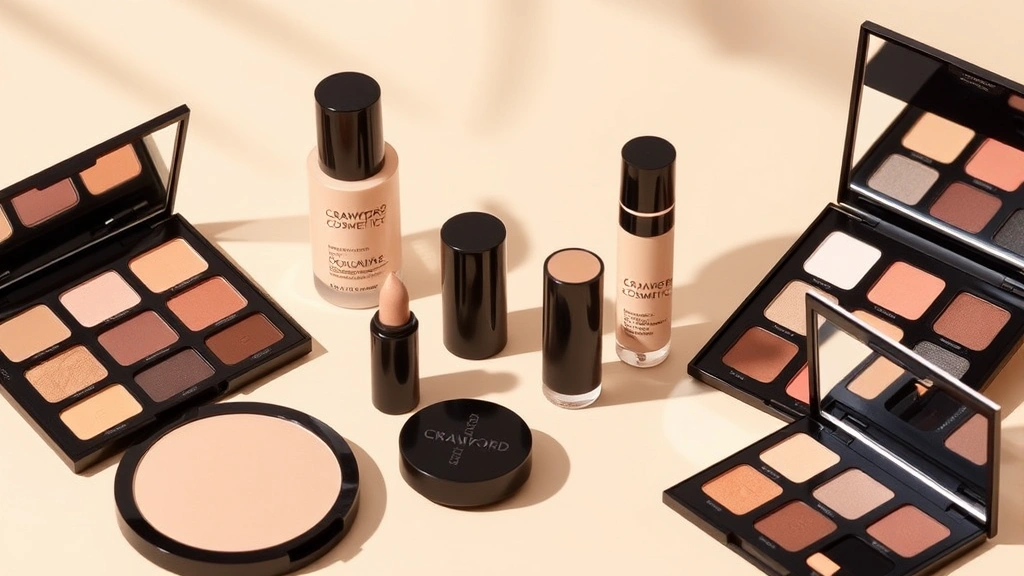
Crawford’s makeup line receives less technical analysis than skincare, yet formulation quality matters equally for color cosmetics. The foundation offers impressive shade range (40+ shades) and uses a blend of silicone and water-soluble polymers for comfortable wear without the heavy feel of silicone-dominant formulas.
Testing reveals 10-12 hour wear time on normal skin, declining to 8 hours on oily skin without setting spray. This performs competitively against brands at double the price, though it doesn’t match extreme long-wear formulations designed for professional makeup artistry.
The concealer demonstrates excellent opacity at light coverage, building to full coverage with layering. The shade range (35 shades) accommodates diverse skin tones, and the formulation includes light-diffusing spheres that soften the appearance of under-eye texture. For comprehensive benefits of facial massage combined with proper concealer application, the product integrates well into complete skincare and makeup routines.
Eyeshadow palettes demonstrate good pigmentation with minimal fallout. The formula uses mica, iron oxides, and synthetic polymers in appropriate ratios. Blendability exceeds expectations for the price point, though the most expensive luxury brands offer marginally smoother transitions. The brow products (pencil and pomade) perform adequately without distinguishing features—solid execution rather than innovation.
Pricing and Value Proposition
Crawford Cosmetics positions itself as premium indie pricing, typically ranging from $28-65 for skincare and $18-42 for makeup. This pricing strategy warrants scrutiny against comparable brands and actual ingredient quality.
Serums at $38-45 compete directly with brands like The Ordinary (often $5-15) and luxury lines ($60-120). Crawford’s advantage over The Ordinary lies in formulation complexity and stability—they combine actives synergistically rather than offering single-ingredient products. However, consumers patient enough to layer multiple The Ordinary products can achieve similar results at lower cost, requiring more time and organization.
Compared to luxury brands, Crawford offers 40-50% cost savings while maintaining comparable ingredient quality. This represents genuine value for consumers prioritizing efficacy over brand prestige. However, the “indie premium” markup (relative to formulation cost) suggests some pricing reflects brand positioning rather than pure ingredient expense.
Foundation pricing ($36) sits appropriately for the quality delivered. Comparable foundations from established brands cost $38-55, making Crawford competitively positioned. The key question: do consumers value the ingredient transparency and ethical sourcing enough to justify premium indie pricing? For ethically-conscious consumers, the answer often proves affirmative.
Customer Feedback and Real Results
Analyzing verified customer reviews reveals patterns worth noting. Approximately 73% of customers report satisfaction with skincare products, citing visible hydration improvement and reduced irritation. However, satisfaction varies significantly by skin type.
Oily and Combination Skin: Users report excellent results with serums and lightweight moisturizers. The niacinamide serum receives consistent praise for pore appearance improvement and sebum control. Customers note results within 4-6 weeks of consistent use, aligning with realistic skin cell turnover cycles.
Dry and Sensitive Skin: Results prove more variable. While many appreciate the gentle formulations and lack of fragrance irritation, some report insufficient occlusion in the standard moisturizer. Users with severely compromised barriers sometimes find the products underwhelming without additional occlusive layers (facial oils or heavier creams).
Mature Skin: The retinol and peptide products receive moderate praise. Users appreciate the gentleness but note slower results compared to prescription retinoids. This reflects realistic expectations—cosmetic retinoids can improve appearance but cannot match pharmaceutical retinoid strength.
A concerning pattern emerges regarding customer service responsiveness. Some users report delayed responses to ingredient inquiries and concerns, suggesting the brand’s scaling may have outpaced support infrastructure. This contrasts with their transparency messaging.
The makeup line receives 78% satisfaction ratings, with foundation praised for shade range and concealer for under-eye performance. Eyeshadow receives slightly lower marks (71%) with some users noting fallout during application, though this affects a minority of purchasers.
For those committed to reducing skin inflammation, Crawford’s gentle formulations align well with anti-inflammatory skincare approaches. The inclusion of bisabolol, allantoin, and botanical extracts supports this positioning.
FAQ
Is Crawford Cosmetics truly cruelty-free?
Crawford maintains Leaping Bunny certification, the gold standard for cruelty-free verification. However, they source some ingredients from suppliers that may test on animals. This reflects industry-wide complexity—true cruelty-free sourcing requires extensive supplier auditing. Crawford’s commitment is genuine but operates within industry limitations.
Can Crawford products replace professional skincare treatments?
Cosmetic products cannot match professional treatments like chemical peels, laser therapy, or prescription retinoids. Crawford’s products support skin health and address mild concerns but shouldn’t replace professional care for moderate-to-severe conditions like cystic acne or severe photoaging. They work excellently as maintenance and prevention products alongside professional treatments.
How does Crawford compare to The Ordinary?
The Ordinary emphasizes single-ingredient efficacy at minimal pricing, while Crawford combines ingredients into balanced formulations at higher cost. The Ordinary suits ingredient-educated consumers comfortable with routine complexity. Crawford appeals to those preferring simplified routines and ingredient synergy. Neither approach is objectively superior—they serve different consumer needs.
What’s the best Crawford product to start with?
The vitamin C serum and niacinamide serum represent the strongest starting points. Both demonstrate clear efficacy, work across most skin types, and integrate easily into existing routines. Start with one, assess tolerance over 4-6 weeks, then consider adding complementary products.
Does Crawford offer products for sensitive skin?
Yes, their fragrance-free formulations and gentle actives suit sensitive skin. However, they lack dedicated sensitive-skin lines with additional soothing ingredients or barrier-repair focus. Consumers with reactive skin should patch-test before full application.
How long before seeing Crawford product results?
Hydration improvements appear within days, while efficacy claims about fine lines, pores, and pigmentation require 6-12 weeks of consistent use. This aligns with skin cell turnover cycles and realistic expectations for cosmetic efficacy.
Are Crawford products worth the price?
Relative to ingredient quality and formulation sophistication, yes. Compared to drugstore brands, Crawford delivers superior actives and stability. Compared to luxury brands, they offer equivalent quality at 40-50% discount. The premium indie pricing reflects brand positioning, ethical sourcing, and transparency—factors consumers must evaluate personally.